
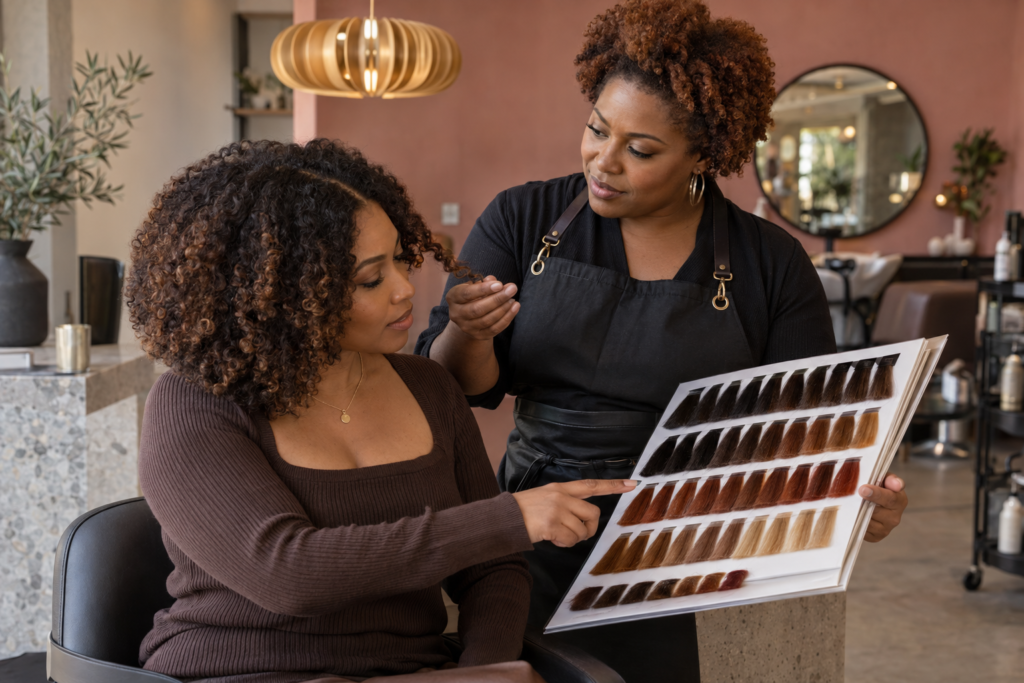
Hair color can refresh your appearance, cover gray hair, or create a completely new look. However, permanent color and lightening treatments alter the hair and may cause dryness, brittleness, irritation, or breakage. A consultation before the service can help identify potential risks.
Discuss Your Hair History
Tell your stylist about previous color, bleach, relaxers, perms, keratin treatments, or other chemical services. Color applied over previously treated or weakened hair may behave differently than expected.
Ask your stylist:
- Is my hair healthy enough for this service?
- Will lightening be required?
- Can the result be achieved gradually?
- Should a strand test be performed?
- What maintenance will the color require?
- Which products should I use afterward?
Consider an Allergy Test
The American Academy of Dermatology recommends following the manufacturer’s instructions when testing store-bought hair color. Do not proceed if testing causes redness, swelling, burning, itching, or a rash. Contact a dermatologist if you suspect an allergic reaction.
A previous problem-free coloring service does not guarantee that a future application will not cause a reaction.
Understand the Risks of Lightening
According to the AAD, lightening hair more than three shades typically requires stronger peroxide and can cause more damage. Ask whether a shade closer to your natural color could provide the desired result with less processing.
Stop if You Experience Burning
Mild sensations and significant scalp burning are not the same. Tell your stylist immediately if you experience strong burning, pain, swelling, or unusual irritation. The product should not remain on the scalp simply to complete the scheduled processing time.
After coloring, use appropriate conditioning products, reduce excessive heat, and protect treated hair from prolonged sun exposure.
Read the complete dermatologist-reviewed guidance from the American Academy of Dermatology:
https://www.aad.org/public/everyday-care/hair-scalp-care/hair/coloring-perming-tips
This article provides general educational information and does not replace professional medical advice. FitMyBeauty is not affiliated with or endorsed by the organization referenced.