
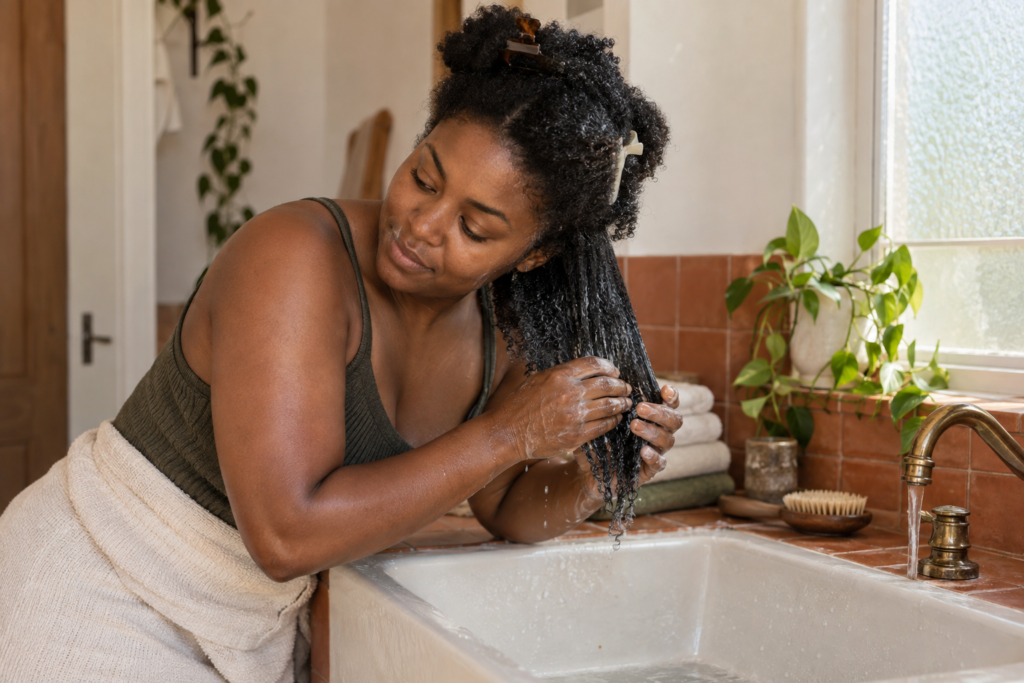
Natural and textured hair can range from loose waves to tightly coiled curls. Because these hair types often experience dryness, knots, and breakage, a consistent routine should balance scalp cleansing with moisture and gentle handling.
Clean the Scalp Regularly
DermNet recommends shampooing textured hair at least every one to two weeks to help prevent product buildup and scalp irritation. However, the right schedule depends on your scalp, lifestyle, hairstyle, and product use.
When washing:
- Apply shampoo mainly to the scalp.
- Massage gently with your fingertips rather than scratching.
- Allow the shampoo to rinse through the length of the hair.
- Rinse thoroughly to remove residue.
- Adjust your routine if you notice persistent buildup, odor, itching, or flakes.
Restore Moisture After Cleansing
Conditioning adds moisture, reduces knotting, and makes the hair easier to manage. Apply conditioner after shampooing, concentrating on dry areas and the ends.
A leave-in conditioner or suitable moisturizer can provide additional softness between wash days. Select products designed for your hair type and avoid applying excessive amounts that leave the scalp coated with buildup.
Detangle Gently
Textured hair is especially delicate when wet. Divide it into sections and use your fingers or a wide-tooth comb. Begin at the ends and slowly work toward the roots. Detangling while conditioner is present may provide additional slip and reduce unnecessary pulling.
Build a Routine Around Your Hair
No single routine works for everyone. Changes in weather, exercise, protective styles, chemical treatments, and scalp conditions may affect how frequently your hair needs cleansing or moisture.
Persistent itching, scaling, sores, unusual breakage, or hair loss should be assessed by a qualified healthcare professional.
Read the complete guidance from DermNet:
https://dermnetnz.org/topics/hair-care-practices-in-women-of-african-descent
Additional dermatologist-reviewed tips are available from the American Academy of Dermatology:
https://www.aad.org/public/everyday-care/hair-scalp-care/hair/healthy-hair-tips
This article provides general educational information and does not replace professional medical advice. FitMyBeauty is not affiliated with or endorsed by the organizations referenced.