
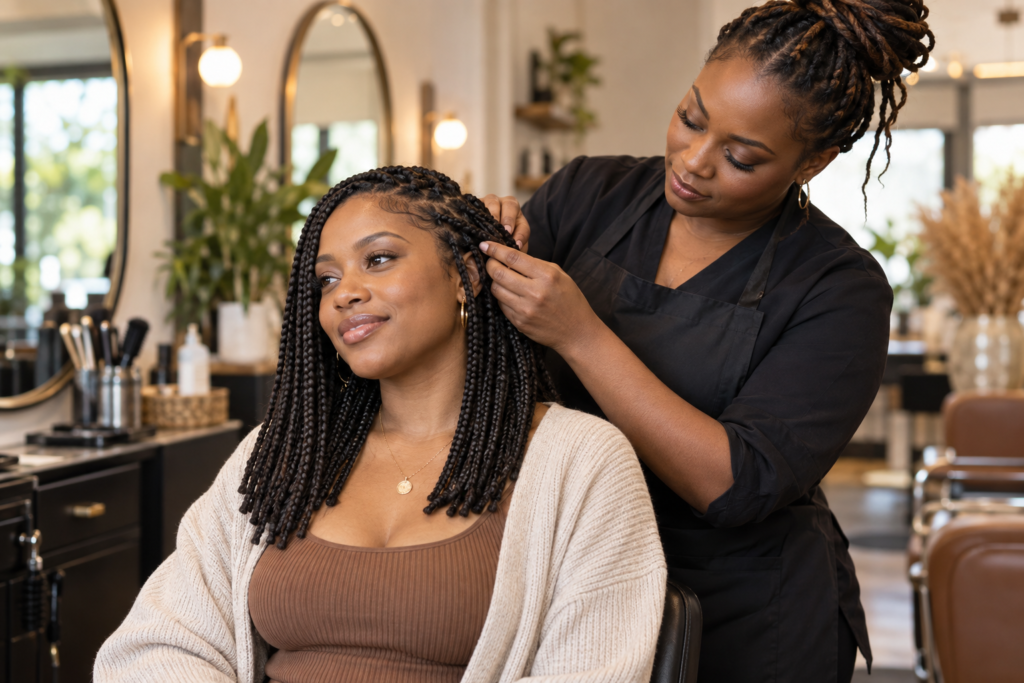
Braids and other protective styles can reduce daily hair manipulation, but excessive tension may damage the hair and scalp. The American Academy of Dermatology Association (AAD) warns that tightly installed braids, cornrows, locs, extensions, and weaves can contribute to traction alopecia—a form of hair loss caused by persistent pulling.
Warning Signs
A hairstyle may be too tight if you experience:
- Pain, stinging, or persistent tenderness
- Scalp irritation or crusting
- Broken hairs around the forehead
- A receding hairline
- Thinning where the hairstyle pulls most strongly
Pain should not be considered a normal part of braiding. Ask the professional to loosen or adjust any style that feels excessively tight.
Ways to Protect Your Hair
The AAD recommends:
- Choosing looser styles, particularly around the hairline
- Considering thicker or shorter braids to reduce tension and weight
- Avoiding repeated pulling on the same areas
- Changing hairstyles regularly
- Limiting braid or loc wear to approximately six to eight weeks
- Removing or adjusting styles that cause continuing pain or irritation
Consult a board-certified dermatologist if you experience persistent thinning, inflammation, breakage, a receding hairline, or bald patches.
Before Your Appointment
Ask the beauty professional about braid tension, extension weight, recommended wear time, preparation requirements, and aftercare.
Helpful Hair-Care Essentials
Depending on individual needs, useful items may include a satin bonnet or pillowcase, gentle scalp cleanser, lightweight moisturizer, scalp oil, or microfiber towel. Future product links in this section may be affiliate links and will be clearly disclosed.
This FitMyBeauty summary is provided for general education and is not medical advice. FitMyBeauty is not affiliated with or endorsed by the American Academy of Dermatology Association.