
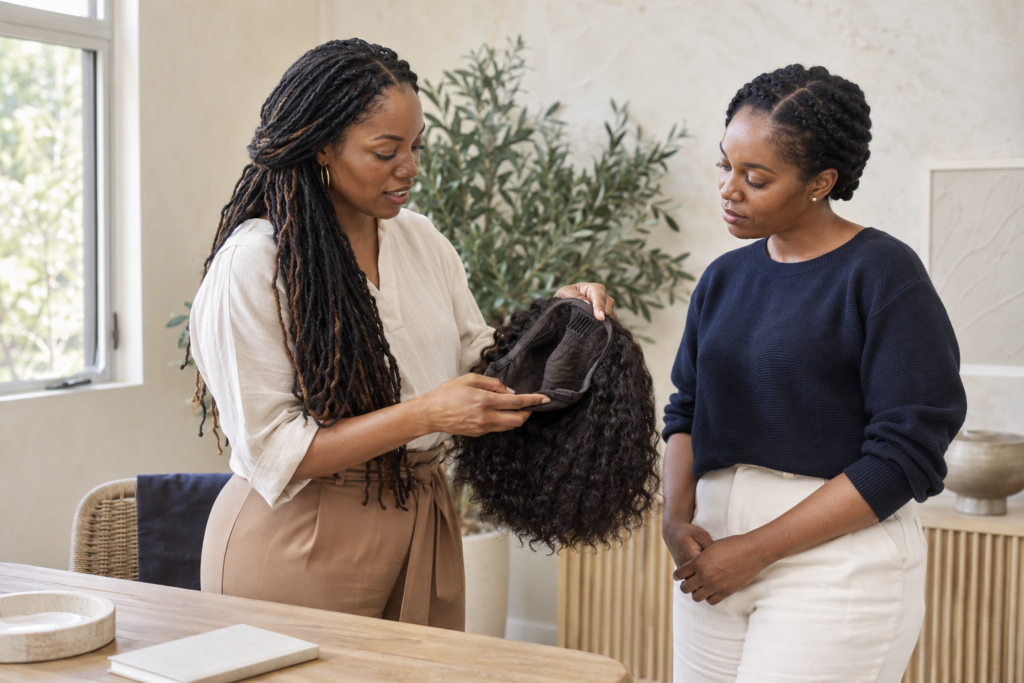
Wigs and extensions can create a beautiful new look, but their weight and attachment methods may place repeated tension on the hair and scalp. Over time, excessive pulling can contribute to traction alopecia—a form of hair loss caused by prolonged tension.
Signs Your Style May Be Too Tight
Pay attention to:
- Pain, stinging, or tenderness
- Redness, itching, or scalp irritation
- Small bumps or crusting
- Broken hairs around the hairline
- Thinning near attachment points
A protective style should not remain painful after installation. If a wig, weave, or extension causes discomfort, ask your stylist to loosen or remove it.
Reduce Tension and Protect Your Hair
The American Academy of Dermatology recommends wearing weaves for shorter periods and removing them immediately if they cause pain or irritation. Additional precautions include:
- Avoiding tight cornrows beneath wigs or weaves
- Choosing lightweight extensions
- Limiting the amount of hair attached to fragile sections
- Rotating hairstyles to give the scalp time to recover
- Avoiding glue when a safer attachment method is available
- Reducing heat and chemical treatments when the hair is already stressed
Check Your Natural Hair Regularly
A wig can hide early damage, so examine your edges and scalp between installations. Persistent tenderness, breakage, thinning, or smooth bald areas should not be ignored. A board-certified dermatologist can determine the cause and recommend appropriate care.
Read the complete guidance from the American Academy of Dermatology:
https://www.aad.org/public/diseases/hair-loss/causes/hairstyles
Additional medical information about traction alopecia is available from DermNet:
https://dermnetnz.org/topics/traction-alopecia
This article is provided for general education and does not replace professional medical advice. FitMyBeauty is not affiliated with or endorsed by the organizations referenced.